Showing posts with label French canal cruise. Show all posts

Friday, July 08, 2022

Barge Availability Calendars

 New Feature

We have created calendars for each barge we represesnt so you can check availability for your preferred dates.
 
The online brochure's Rates page for each barge now has a button under the list of rates for a particular year. For example, under the 2022 rates you will see a Check Availability button.


And similar for 2023:

We plan to update the calendars weekly, if not more often. 
 
We know it can be tedious going back and forth looking for barges with open dates but you don't have to do this yourself. Contact us with your barge vacation details. We will be happy to discuss your plans and send you a selection of possibilities.
 
Inquire
 
Visit our website for more information on our barges and barging: www.BargeCharters.com
 

   #BargeCharters #Cruises #BargeCruises #BargingInFrance #FrenchCanalCruises #EuropeanCruises


Tuesday, March 08, 2022

Barging Guide to the Burgundy Canal - Part 3

 Barging in France

 The Burgundy Canal – Part 3


Best Places to Visit

Beaune, capital of the Burgundy wine country, is one of the best preserved medieval cities in Burgundy. Until the 15th century, Beaune was the residence of the Dukes of Burgundy. France eventually took the town from the Burgundians in 1477, after Louis XI annexed the Duchy following Charles the Bold’s death.

First a Gallic sanctuary and then a Roman town, Beaune is now a mecca for wine lovers. Ramparts surround this thriving town and have a labyrinth of caves (wine cellars). During its three-day festival and wine auction in November, free wine-tastings draw immense crowds, many of whom arrive thirsty and leave satisfied, albeit a little tipsy.


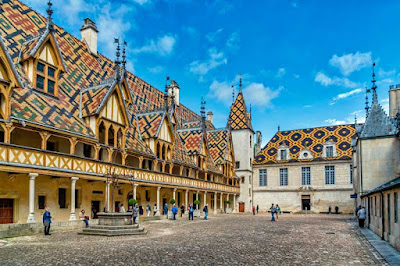
The Hôtel-Dieu dates from the 12th century and is a charity hospital funded by the sale of wines produced on lands donated by its benefactors. Until 1971, it was a working hospital. It was originally constructed to provide free care for men who had fought in the Hundred Years’ War. Today, the Musée de l’Hôtel-Dieu displays Flemish-Burgundian art and the Grand Salle, at 165 feet long, is a showpiece to display its original furniture. Its world-renowned roof tiles are polychromatic in the Burgundian-style and date from the Renaissance.

Chablis is a pretty little town on the banks of the River Serein. Known as the “Golden Gate” of Burgundy, it is famous the world over for its crisp dry white wines. Visitors enter through the turreted towers of the Porte Noël gateway, opening on to narrow stone streets and houses dating from the 14th to 16th century. St-Martin’s collegiate church, whose construction started in 1160, was one of the first French churches of Gothic design. It is a miniature copy of the Sens Cathedral. Relics of Saint Martin, the patron saint of travellers, are kept in the church named after him.

Châteauneuf-en-Auxois is a tiny, charming, hilltop village, well worth the climb up the steep path. This fascinating, romantic bastide (fortified town) has a turreted castle, encircling walls, and elegant houses once belonging to rich merchants. The château, built in the 12th to 15th centuries, affords a broad vista over the rolling farmlands, the Burgundy Canal and the woodlands of the Morvan Forest. At its peak, the town had a population of 500; today it has approximately 90 inhabitants.

The Petit Pontigny is a set of buildings, surrounded by walls, which are the center of all festivities and ceremonies of Chablis and its famous vineyards. Its cellar, also dating from the 12th century, is now the only original part of this property and once belonged to the monks of Pontigny. Nearby is the St-Cosme priory, built in the 12th century by the monks of the Château de Commarin. It has been in the hands of the same family for 26 generations – over seven centuries! This once fortified castle, built in 1346, underwent radical transformations in the 16th century to convert it into a modern habitation and was further reconstructed in the 17th and early 18th centuries. Today, two large towers and a small chapel are the only 14th-century structures that remain. The existing château was built in the 18th century by the Marquis d’Antigny, minister for Napoleon, and the Marquise d’Antigny, grandmother to the Prince de Talleyrand. The château houses a collection of tapestries from the 16th century and rare examples of period furniture and other objects.

 
One of the largest vineyards in Burgundy is the Clos de Vougeot. Château de Clos de Vougeot is a small château built to house the wine presses needed by the Cistercian monks to make wine for their religious ceremonies. The château is now the seat of Burgundy’s most sophisticated wine lovers; the Confrerie des Chevaliers du Tastevin. In Epineuil is the Petit Quincy Abbey, built in 1212 by the Cistercian order. In this magnificent setting, they produce great Epineuil and Chablis wines.

Irancy is possibly most famous for its wines; the area predominantly produces red wines from the Pinot Noir variety, however they also make a small amount of rosé wines. Irancy’s unusual topography shelters it from the worst of the winter weather, while also allowing for sufficient sun to ripen the grapes. This is one of the most northerly areas for growing red wine grapes.

Meursault is a large, well-to-do town. It is at the entrance to the great white wine producing basin of the Côte de Beaune, where vineyards spread over gentle slopes. The town’s origins lie with a Gallo-Roman settlement, Mont Mélian, and the remains of its fort are still visible on a hill above the village. Later, in the Middle Ages, the town served as a base for treating leprosy in the Hôpital de Meursault. Today the town is the home of an international wine festival. La Paulée de Meursault and its eponymous white wines are some of the most celebrated in Burgundy.

Château d’Époisses is a medieval castle that has been in the same family since 1661. The village is famous for its soft creamy, and very pungent cheese, which is washed in Marc de Bourgogne (a local spirit) that helps it to ripen.

Abbaye de Fontenay

Nearby is the Cistercian Abbey of Fontenay. Founded by St-Bernard in 1119, UNESCO described it as being “an excellent illustration of the ideal of self-sufficiency as practiced by the earliest communities of Cistercian monks”. Ravaged and abandoned during the French Revolution, and later serving time as a paper factory, the carefully restored Abbey is now the most complete remaining medieval monastery in France. As a testimony to the monastery’s desire to be self-sufficient, the complex includes cloisters, dormitories, outbuildings, fish ponds, bakery, mill, forge and even a prison.

Semur-en-Auxois, built on a pink granite cliff in a hollow of the Amarançon Valley, is a splendid example of a small Burgundian town. Dating from the 14th century, four circular towers which doubled as dungeons guarded this fortress town. The Tour de l’Orle d’Or houses a small museum and the town’s Notre Dame de Semur Gothic church is considered by some to be the most beautiful in Burgundy.


Barging in France - Discover Burgundy

 
Inquire

 
Contact Paradise Connections Yacht Charters to book your barge trip
Visit our website for more info on our barges and barging: www.BargeCharters.com


#barginginfrance #barginginburgundy #bargecharters #frenchcanalcrise #paradiseconnections


Monday, March 07, 2022

Barging Guide to the Burgundy Canal - Part 2

  Barging in France

 
The Burgundy Canal – Part 2

 
Click on map to enlarge in new window
 

Towns & Villages along the Burgundy Canal

The fortified hilltop town of St-Florentin lies at the juncture of two rivers, the Armance and the Armançon, and is one of the first towns on the Canal de Bourgogne when joining the River Yonne. Besides its many stone buildings, its church caps the town (built between 1500 and 1614), which has lovely stained glass windows by the Troyenne school.

Located where the Armançon divides into several channels, Tonnerre is a sizeable town, dating back to the Roman period. A devastating fire in 1556 caused the town to be largely rebuilt. Many of its ancient houses sport red-tiled roofs. Notre-Dame des Fontenilles is a hospital founded in 1293 by Marguerite de Bourgogne, sister-in-law of Louis IX. The main hall of the hospital, the Grande Salle, is 280 feet long with vaulted oak ceilings.

The Fosse Dionne, in the town’s center, is a basin fed by the green waters of a natural underground spring. In the Gallo-Roman period, its waters supplied the hilltop settlement (or Oppidum) for drinking and washing. In 1758, a local nobleman, Louis d’Éon, converted the spring into a washhouse; listed as a historic monument since 1920. Louis d’Éon’s son, Chevalier d’Éon, grew up to be a famous dignitary for Tonnerre. In 1756, he joined a secret network of spies called the Secret du Roi, employed by King Louis XV but without the knowledge of his government. During this time, he infiltrated the court of Empress Elizabeth of Russia by posing as a woman. Later in his life, stationed in London, he helped draft the peace treaty that would officially bring an end to the Hundred Years War. He subsequently became paralysed after suffering from a fall and spent the last four years of his life bedridden. He died in poverty in London in 1810 and is buried in St Pancras Old Church.

Château de Tanlay

Surrounded by rolling hills where white Charolais cattle graze and where mistletoe hangs from poplars, Tanlay seems right out of a picture book. The Château de Tanlay, built in the 15th and 16th centuries and one of the finest in Burgundy, has a beautifully decorated interior. Surrounded by a series of moats, arcades and iron grills, the château is situated in glorious parkland.

The town of Ancy-le-Franc has a market and a magnificent Renaissance château, which hosted many prestigious guests, including Henry IV, Louis XIII, and Louis XIV who stayed in the Blue Room, or Salon Bleu.

Built in the 16th century by Italian architect Sebastione Serlio, the château has an austere, grey stone exterior, with massive square towers and a grand front entrance. Its lavish interior is richly decorated with carved or painted walls and ceilings.

The church in the small village of Ravières, built in 1701, was added to the list of Historic Monuments in 1913. It is also the site of the once famous “pottery barge,” whose owner would cruise from village to village selling plates, bowls, and jugs.

Montbard is a small industrial town and a metallurgical center. The Comte de Buffon, an iron-master whose industry was an economic boon to the town, built the Forges de Buffon in 1768. The water was damned and controlled to power the watermills which powered blast furnaces. This system was years ahead of its time and was an important influence in the beginnings of the industrial revolution in France. After serious floods, they converted the forge into a cement factory and then ceased activity altogether. The forges have since undergone extensive restorations and are open to the public.

The Comte was also a naturalist, whose daily observations led to the publishing of the Histoire Naturelle over a 40-year period. The town has a Hôtel Buffon, the Buffon Institute, Buffon Park, and the Buffon Chapel where the Comte is buried .

Venarey-les-Laumes
is a railway junction and the capital of the Auxois region. The town looks out over the Laumes plain, where Julius Caesar conquered the Gauls in 52 BC at the Battle of Alesia. Caesar’s victory over the combined Gallic forces was claimed to help establish Roman dominance in Gaul for the next 500 years.

Pouillenay
is a village famous for the anise-flavored sweets made there since the 9th century. The neighboring village of Flavigny-sur-Ozerain has found more recent fame in the confectionery world as the setting for the 2000 film Chocolat.


Châteauneuf

Vandenesse-en-Auxois, a quiet village near the summit of the Burgundy canal, and the village of Châteauneuf, with its spectacular hilltop castle, marks the beginning of the Auxois plain.

Pouilly-en-Auxois is a large and flourishing town with a spacious port in a sizeable basin at the summit of the Burgundy canal. The town thrives on agriculture and tourism. Nearby is the fascinating two-mile long Pouilly Tunnel.

Escommes is a hamlet which marks the summit of the canal, and features a loading dock, once used to transport empty barges through the Pouilly tunnel. You can see the turbine house, which provided hydroelectric power for the electric tug, and its sluice gate system to divert water from the canal to drive the turbines and generate power.

Pont d’Ouche is an aqueduct with three-arches carrying the Burgundy canal over the River Ouche. The River Ouche meets the canal here and follows it all the way to the River Saône. Once a center of tile production, barges would carry them as cargo to be distributed and sold in larger towns and cities. There is often an early morning mist and a mirror reflection on the canal surface. At sunset you may see deer and wild boar coming down from the forest to drink.

La Bussière-sur-Ouche has several well-kept stone cottages, and a restored 13th century Cistercian abbey, St-Victor-sur-Ouche. The village is split into two very distinct parts, “La Forge,” which the Burgundy canal runs through, and “La Bussière” with the abbey.

The abbey grounds are a place of calm and meditation where you can walk in the footsteps of the monks. There are beautiful springs, streams and fountains, as well as some unusual buildings, such as a dovecote dating from the 15th century. Also seen in the gardens are tombstones of crusading knights. Today the Abbey is a hotel and retreat. Two streets from the canal is the little Romanesque church L’Eglise de l’Assomption, which features a distinct slate steeple.

The grounds of the Château at Barbiery-sur-Ouche contain a very impressive and renowned collection of wild flowers, and listed with the National Monuments in 2005. On the hilltop are the ruins of a feudal château, once owned by the Marigny family. Nearby at Roche Chèvre are the remains of a Tumulus, or Visigoth burial site, and a cave which could have been used for Neolithic burials.

Gissey-sur-Ouche is a hamlet of approximately 350 inhabitants. With a few canal-side cottages, the Mairie, and washhouse, it is one of the most charming villages along the Burgundy Canal.

Sainte-Marie-sur-Ouche lies in a deep and narrow valley created by erosion-resistant limestone dating from the Jurassic period. Pont de Pany, a hamlet near Sainte Marie-sur-Ouche, was once a very important bread market. A bridge crossing the river Ouche was an important crossroads for trading routes during the Middle Ages.

Fleury-sur-Ouche is a very traditional village offering all the charms of France. There are many small streets to explore, with plenty of little boutiques, a café, and some ancient houses.

Dijon is a modern, growing city with a well-designed canal port. It is the center of the Côte d’Or and was once the capital of Burgundy in the 14th and 15th centuries. Visitors can wind their way through the narrow streets of the old quarter and look around the city’s many museums, the Ducal Palace which opens onto the square, the Parliament Building, and the 13th century Cathedral St-Bénigne with its Romanesque crypt.

Several of the buildings in Dijon have roofs of glazed tiles with varied colours and patterns. And, of course, the mustard merchants sell their product in beautiful faïence jars. It is thought that the recipe for the world-famous condiment dates to the 4th century AD. Don’t miss the city market, where a vast selection of local delicacies is always on sale.

Château de Longecourt
built as a fortress in the 12th century, was transformed into a château in the 17th century. In order to be designated a château in France, the property must have a well and a chapel, which is why many châteaux don’t look like castles but stately homes. Further embellishments added in the next century resulted in the neoclassical Italian style home of today. Surrounded by moats and four towers, the Château is in a 100-acre park.

St-Jean-de-Losne sits at the juncture of the Saône and the Burgundy Canal. Even before the advent of the canal, the town was a thriving river port. In 1273, the lords of Franché-Comte laid siege with 500 troops dressed up as women. The town uncovered the ruse and killed all the attackers.

In 1636, 80,000 troops of the Holy Roman Empire threatened St-Jean-de-Losne. With 400 citizens and 150 soldiers, to which were added 800 reinforcements from nearby Auxonne, the town miraculously held off the siege. Thereafter, the town was known as La Belle Défense. In 1870, a German advance was also turned away. Clearly, this is a town which values its independence.

St-Jean-de-Losne has a large basin and was once used to store timber floated down the river. It is now a port used for mooring recreational craft, and today is the largest of its kind in France, and an incredible depot for all things to do with barges. Whether you need water pumps, engines or propellers, St-Jean-de-Losne is the place to come. Every summer a gymkhana or rally takes place for boating enthusiasts. In a restored 15th century house is an exhibition titled “The Barges of St-Jean-de-Losne,” housing a complete collection of barge equipment, hand pumps, bailers, and wooden jacks used to raise boats in dry dock.


Barging in France - Discover Burgundy

 
Inquire

 
Contact Paradise Connections Yacht Charters to book your barge trip
Visit our website for more info on our barges and barging: www.BargeCharters.com


#barginginfrance #barginginburgundy #bargecharters #frenchcanalcrise #paradiseconnections


Sunday, March 06, 2022

Barging Guide to the Burgundy Canal - Part 1

Barging in France
 
The Burgundy Canal – Part One


An Overview

The Burgundy Canal is 150 miles long with 189 locks and connects the River Yonne at Migennes with the River Saone at St-Jean-de-Losne. It has the highest summit of any canal in France, reaching 378m (980 ft) above sea level, which is the 2-mile long Pouilly tunnel.
 
The history of the Burgundy Canal is long and complicated. Although the first act to support its construction was the 1607 tax placed on local farmers to help finance a segment of the waterway, it took over 100 years to decide the canal’s ultimate route.
 
In the mid-17th century, Pierre Paul Riquet, the chief engineer of the Canal du Midi, proposed a route which was thought to be too expensive, then in 1696 the military engineer Vauban proposed five different designs, one of which was adopted 30 years later. The work, however, did not begin until 1777 at the beginning of the reign of Louis XVI.
 

Construction of the Burgundy Canal began in the west, alongside the River Yonne, working upstream towards the town of Tonnerre. A few years later, work began on the Saône side in the east, working west towards Dijon. The Yonne side of the Burgundy Canal fell rapidly behind schedule, and, because of inadequate funding, the construction of that section halted in 1793.
 
The French Revolution and the Napoleonic Wars further slowed progress on the construction. The State of Burgundy, however, pushed ahead, completing the first segment of the Burgundy canal between the city of Dijon and the River Saône. Fifteen years later, in December 1808, the first barges arrived at the port of Dijon.
 
Yet even with the support of the Emperor Napoleon, the completion of the full canal still met many delays because of problems with financing and construction. Finally, funds were secured, and they brought the project to completion. In late December 1832, the first boat to traverse the entire route of the Burgundy Canal set out from Paris, arriving in Dijon on January 3, 1833. The canal at last connected the north of France to the south and the River Seine to the River Rhône.
 
One of the ultimate challenges of the construction project was the complicated and impressive Pouilly Tunnel, which forms the summit. The building of the tunnel started in 1826 and took six years to complete, some say partly with forced labor by English prisoners of the Napoleonic Wars.
 
 
The tunnel is two miles long and runs in a straight line. At the time of construction, 90% of the work had to be done by hand, which was a hard and dangerous job. In its deepest section, the tunnel runs 150 feet below the surface. They constructed 32 shafts to help haul the spoil to the surface during the digging. Today, these shafts provide ventilation to the boats passing through the tunnel below.
 
In the early years of the tunnel’s use, bargees had to pull their barges along the length of the tunnel using a chain attached to the wall with passage through the tunnel taking up to 10 hours. In 1867, a steam tug was used to haul barges through the tunnel and in 1893, an electric tug replaced it, reducing passage time. Although the tug is no longer used, visitors can still see it displayed in the small town of Pouilly-en-Auxois.
 
As well as constructing the Burgundy canal itself, the builders had to address the problem of water supply, which was acute because of the height of the summit at Pouilly and the limited amount of natural water. In the end, two supply channels and seven reservoirs had to be built to store water upstream and keep the canal full during periods of drought. Even today, maintaining an adequate water depth in the canal is a constant challenge.
 
Further construction included housing for lock keepers, as well as “maison gardes” which were occupied by teams of maintenance workers who would move along the canal to do repair work. Today, almost all the lock houses remain, but many of them have become holiday cottages as the number of lock-keepers has fallen. Now, one keeper services several locks with the help of some automation and a car or scooter to quickly move between the locks in his or her charge.
 
Like the other canals in France, by the mid-19th century, its commercial importance of the Burgundy Canal was waning. By 1882, they had increased lock sizes to the Freycinet standard to allow 250 tonne barges to pass, but speeds were still slow compared to newly arrived rail transport, particularly with the Pouilly tunnel which only permitted one way traffic. Fortunately, in more recent times, tourism has breathed new life into the waterway and the towns it serves, and today the Burgundy Canal is one of the most popular pleasure-boat destinations in France.
 
Besides the undulating countryside and the historical significance of several towns on its route, the region is, of course, famous for its superb wines.


Barging in France - Discover Burgundy

 
Inquire

 
Contact Paradise Connections Yacht Charters to book your barge trip
Visit our website for more info on our barges and barging: www.BargeCharters.com


#barginginfrance #barginginburgundy #bargecharters #frenchcanalcrise #paradiseconnections


Monday, July 26, 2021

RECIPE: Gruyère de Comté and Poppy Seed Lollipops

Gruyère de Comté and Poppy Seed Lollipops
 
A great choice for show-stopping canapés or a wonderful homemade gift for your loved ones, these Gruyère de Comté and poppy seed lollipops are sure to be a festive favorite.


Equipment
 
  • 2 large baking trays
  • 10 lollipop sticks
  • Greaseproof paper
  • Cellophane wrap and string or polystyrene block for decoration (optional)

Ingredients

  • 80g Gruyère de Comté finely grated (you can use Italian Parmesan or Swiss Gruyère as alternatives)
  • 1 tsp poppy seeds
  • 1 tsp sesame seeds
 
Method
 
  1. Preheat your oven on a high heat, at around 220 °C (425°F)
  2. Get two large flat baking trays and line with greaseproof paper
  3. Combine the Gruyère de Comté, poppy and sesame seeds together in a bowl
  4. If you have a 9cm chef’s ring or cookie cutter, place on the baking paper and add a thin layer of the mixture (approx. 1-2cm thick). Alternatively, you can draw a circle around the base of a circular mug or glass to use as a template. When baking, the mixture spreads so ensure there’s plenty of space between each one!
  5. For added magic, place a lollipop stick on top, with the tip in the centre of the cheese disc. If you have any spare Gruyère de Comté – cover the tip of the stick so it’s extra-secure
  6. Repeat the process – you should have around 10 lollipops in total
  7. Bake for 5 minutes on the middle shelf until golden and bubbling
  8. Once baked, slide the discs onto a cooling rack to avoid a soggy bottom!
  9. When cooled, place the lollipop in a small cellophane bag and tie with festive string for the perfect homemade present, or for a fabulous centerpiece, decorate a styrofoam block and pierce each with a lollipop stick!

Ready for a Barge Cruise?
 
Inquire

We have many special offers that may be of interest


Visit our website for more info on our barges and barging: www.BargeCharters.com


Saturday, July 10, 2021

A History of Western Provence Wines

A History of Western Provence Wines
 
Want to know more about Western Provence wines? This handy little guide will reveal everything you need to know… 

 
The city of Massalia, (modern day Marseille), was founded by the Phoenicians in 6th century BC. Traders from the east plied the Mediterranean and brought vines and wine to the area, planting grapes throughout the south of France. The wines produced during this period were not "red" as we think of red wine today. Grapes were pressed and processed very quickly, giving the wines a pale color.
 
 
When the Romans took control of the region in the 2nd century, the pink wines of Massalia were already famous and coveted throughout the ancient world. Having access to the Roman Empire’s trade network only spread the wine’s popularity. The Romans created Provence without greatly changing the Italian mode. Their cities and monuments are still its grandest features. The name Provence comes from the Latin “Nostra Provincia” meaning “our province”. Provence wines on the other hand, was, until very recently, nothing special: largely overstrong and under-flavored rosé. The region was argued over by rulers of Barcelona, the Kingdom of Burgundy, the Holy Roman Empire and was dominated by the Catholic Church. Each culture contributed to the vast array of grapes now grown in Provence, but it was the Catholic monks who designed the vineyards and developed winemaking techniques which today are so important.
 
Despite its place in history, Provence is in the shadow of more prestigious areas – but things are changing! Sales of rosé, particularly in the United States, are on the upswing, growing faster than other styles of wine. Once again, "pink wine" is chic and Provence is the benchmark for rosé. Ambitious, stylish and wealthy immigrants are often drawn to Provence’s legendary countryside and climate, and many have reinvented Provence wines. An increasing proportion of its rosé wines are gently made, intriguingly perfumed and dry enough to be perfectly paired with the garlic and olive oil which characterises the region’s cuisine. The second largest, and most western, AOC in Provence, Coteaux d’Aix en Provence is heavily influenced by the famous Mistral winds, and its landscape is as soft and undramatic as the wines tend to be. The vineyards here date back as far as 600 BC and were prized by the Royal Courts of Europe in the 15th century.
 
 
Today, rosé is king and is usually a blend of Grenache, Mourvedre, Cinsault, Syrah and Counoise. Cabernet Sauvignon is grown here too. Perhaps one of the most interesting domains in Côteaux d’Aix-en-Provence is the Château Vignelaure. Acquired by Georges Brunet of Bordeaux just after the Second World War, the winery sought to pioneer Provençal blends of Syrah and the non-native Cabernet Sauvignon. In the west of the region, producers use a higher concentration of Cabernet Sauvignon, which helps distinguish their wines. The vintners around Les Baux produce some exceptionally good wines, and many of their vineyards are organic.
 
Between Aix and the River Rhône is the sub appellation Les Beaux de Provence which was created in 1995 and named after the extraordinary hilltop village of the same name. Les Baux de Provence is probably the warmest part of Provence and its home to the Val d’Enfer or the “Valley of Hell”. Vineyards lie on the hillsides of the Alpilles mountains and, although the climate and rugged terrain are inhospitable, the conditions are perfect for grapes. On average, vines need a minimum of 1,400 hours of sunshine per year to produce ripe fruit. Les Beaux averages 2,700-3,000 hours per year. The AOC regulations now permit white Les Beaux de Provence, made mainly from Clairette, Grenache Blanc and the ever-growing-in-popularity Vermentino. Warmed by the sea and buffeted by Provence’s famous Mistral, this area is even better suited to organic viticulture than the rest of Provence. The Mistral wind keeps everything dry, so rot is not a problem and the average 3,000 hours of sun doesn’t hurt either! Today, 41% of the Provence wine-makers have "gone green".
 

As might be expected of a region with a history of wine growing dating back to Roman times, Provence harbors some well-established wine zones. Perhaps the most historic is Palette on the north-facing, limestone-influenced bank of the River Arc just east of Aix, where the Rougier family of Château Simone have been making wine for over 200 years. Cassis, centered on the small port to the east of Marseille, also makes a serious effort with its distinctive, herbal-scented white wines which can be perfectly paired with the infamously local dish bouillabaisse.
 
Discover Provence
 
Inquire

We have many special offers that may be of interest


Visit our website for more info on our barges and barging: www.BargeCharters.com


Thursday, July 08, 2021

Foodie Barge Cruises in France

French Foodie Barge Cruises
 

If you are a lover of fine food and particularly how and where locally-grown ingredients are sourced, our culinary cruises will really tickle your taste-buds. Enjoy tasting world-class cuisine and sampling fine wines in picturesque surroundings aboard a luxury hotel barge.
 
Our fabulous collection of French Foodie Cruises feature enhanced, more immersive wine and food excursions, daily gourmet dining, and onboard cooking classes presented by talented master chefs.  Read on to find out why these limited tours sell out year after year…
 
 
Culinary Heaven
 
Cruising the idyllic countryside, far from the crowded streets of major cities and tourist traps, these specially-designed cruises include a series of hand-picked gourmet experiences such as “vine dining” at local wineries, “shopping with the chef” for evening ingredients, and meals paired with local wines that reveal the fascinating history and cuisine of the cruise regions.  You can even go truffle hunting in the nearby hills and visit an escargot farm!
 
 
Our 6-night ‘Foodie Cruises’ are available on a selection of luxury hotel barge, including the elegant L’Impressionniste in Southern Burgundy and the stylish Enchanté on the historic Canal du Midi.

 
Cheese and Truffles with Enchanté 

Ultra-deluxe Enchanté is a stylish, 8-passenger double-decker hotel barge with an open-plan kitchen, where guests can observe their skilled master chef at work preparing gastronomic masterpieces.  Itinerary highlights include a visit to a goat farm for a comparative tasting of young and mature goat cheeses.  Guests will also visit an olive press and taste the famous Lucques green olives, as well as Picholine or Ascolana tapenades, which are made with puréed, or finely chopped olives. Similarly, you will visit the medieval fortified city of Carcassonne, where you’ll discover speciality chocolate and other sweet offerings produced by the city’s many artisanal confectioners.  It’s all capped with a stop at a local boulangerie – or bakery – to enjoy freshly baked bread and pastries.
 
 
Also on this foodie cruise itinerary is the market in Narbonne, a former Roman Mediterranean capital, where guests will accompany the hotel barge chef in picking ingredients for the evening meal.  This will be followed by an educational tour and wine tasting at Château Pique Perlou in Minervois.  Another day will be dedicated to truffles, with guests experiencing the art of cavage, or truffle hunting, in the hills of Minervois, after which you’ll taste the famed white variety, known as “white gold”.  You’ll also tour La Cargolade farm, named after the traditional Languedoc dish of snails.  The farm specializes in the Petit Gris variety of escargot, as well as olive oils and seasonal vegetables. Guests then return to the hotel barge to watch a cooking demonstration with the truffles found that day.


Savouring the Moments with L’Impressionniste
 
The 12-passenger hotel barge L’Impressionniste cruises Southern Burgundy, with an elegant décor that includes hardwood flooring, comfortable leather sofas, and large picture windows for a perfect view of the French countryside as it rolls by. Among the culinary highlights is a visit to the Abbaye de Citeaux, home to Cistercian monks. The monks have been making cheese for over a century, using the milk of the white Montbéliarde cows that graze in their meadows.
 
 
New to the itinerary is a drive through the slopes of Côte de Beaune, home to the great names of Burgundy wine.  This is followed by a private tour and tasting at Domaine Chanson, one of Burgundy’s most historic producers, and a gastronomic lunch in the Domaine’s château.  You will also visit the Chevaliers du Tastevin, the famed fraternity of wine enthusiasts, located in the wall-enclosed Grand Cru vineyard of Clos de Vougeot.
 
A walking tour of old Dijon is a popular excursion, with a visit to its mustard shops and indoor food market to select ingredients for the next meal.  Guests will then visit the Edward Fallot Moutarderie mustard mill; a family-run establishment that has been making the spicy condiment since the 1840s.  The tour includes a private tasting of their diverse mustard-based products.
 
Along with the Midi region, Burgundy also enjoys a reputation for fabulous cheeses. This can be explored with a visit to the Gaugry Fromagerie, a famed specialist that still produces the traditional raw milk Époisses, as well as Plaisir au Chablis, a soft and mellow cheese matured with Chablis.


Book With Confidence
 
The health and safety of our guests is a top priority, with strict protocols in place that include crew and passenger temperature checks as well as deep cleaning and disinfecting of all cabins and public surfaces on the barges. For more information, read our Safe Cruising Protocols.
 
Don’t forget, our flexible booking policy allows guests to reschedule 2021 cruises up to 30 days prior to departure, if Government regulations prevent travel. See details HERE.
 
 
Inquire

We have many special offers that may be of interest


Visit our website for more info on our barges and barging: www.BargeCharters.com


Tuesday, November 24, 2020

French Hotel Barge Anjodi Rates Top Marks

Another Excellent Review

⭐⭐⭐⭐⭐

"The service was impeccable, and they did everything to make the trip feel special notwithstanding what was going on in the the world. I would take another trip in the future and would recommend it to anyone who would like to wind down."

- Guest aboard Anjodi, October 2020


About The French Hotel Barge Anjodi


French Hotel Barge Anjodi - Canal du Midi
 
Sporting a classic Dutch design, the 8-passenger Anjodi offers a choice of four air-conditioned staterooms which can be configured as either twins or double according to your preference, each with full en-suite facilities. The spacious sun deck is the perfect place to relax and enjoy an al fresco meal; plus it has a heated hot tub.

Anjodi's highly professional crew of four, comprised of Master Chef, Tour Guide and Host/Hostess, is led by a knowledgeable and experienced Captain who will ensure your cruise is safe and memorable. Their knowledge of the region combined with the 8 bikes provided, will allow you to explore the areas you cruise through in as much detail as you desire.

Anjodi
Standard Classic Cruise Highlights:
  • Tour Carcassonne, the most complete medieval fortified city in existence
  • Narbonne's Archbishop's Palace and colorful market
  • Explore the spectacular hilltop village of Minerve
  • Private wine tasting at the 14th-century Château de Perdiguier
  • View the Pyrenees mountains across the vineyards and discover Cathar history
  • Cruise through the world's oldest canal tunnel at Malpas
  • Excellent towpath for walking and cycling
  • "Biking Plus" option available
Provence & Camargue Cruise Highlights:
  • DATES:
    • June 20-26, 2021
    • June 27-July 3, 2021
  • Tour the famous Chateau Neuf du Papes commune and enjoy a private wine tasting
  • Explore the medieval city of Avignon
  • Visit Arles, the city famed for inspiring over 300 paintings by Van Gogh
  • Explore the 1st century Roman Arena, St Trophime’s Basilica, and the museum of Provencal life 
  • Visit the ancient walled city of Aigues Mortes
  • Cruise across the Etang de Thau to Villeneuve les Maguelones
  • Excellent towpath for walking and cycling
  • "Biking Plus" option available


Cruise the Canal du Midi with Barge Anjodi


Contact Paradise Connections Yacht Charters to book ANJODI
View Anjodi's online brochure
Visit our website for more info on our barges and barging: www.BargeCharters.com